Call Anytime
+91 80878 67383AGRIVENTURE SARVGUN PLUS (NPK + SULPHUR + ZINC + PSF) KIT - Bacterial Product
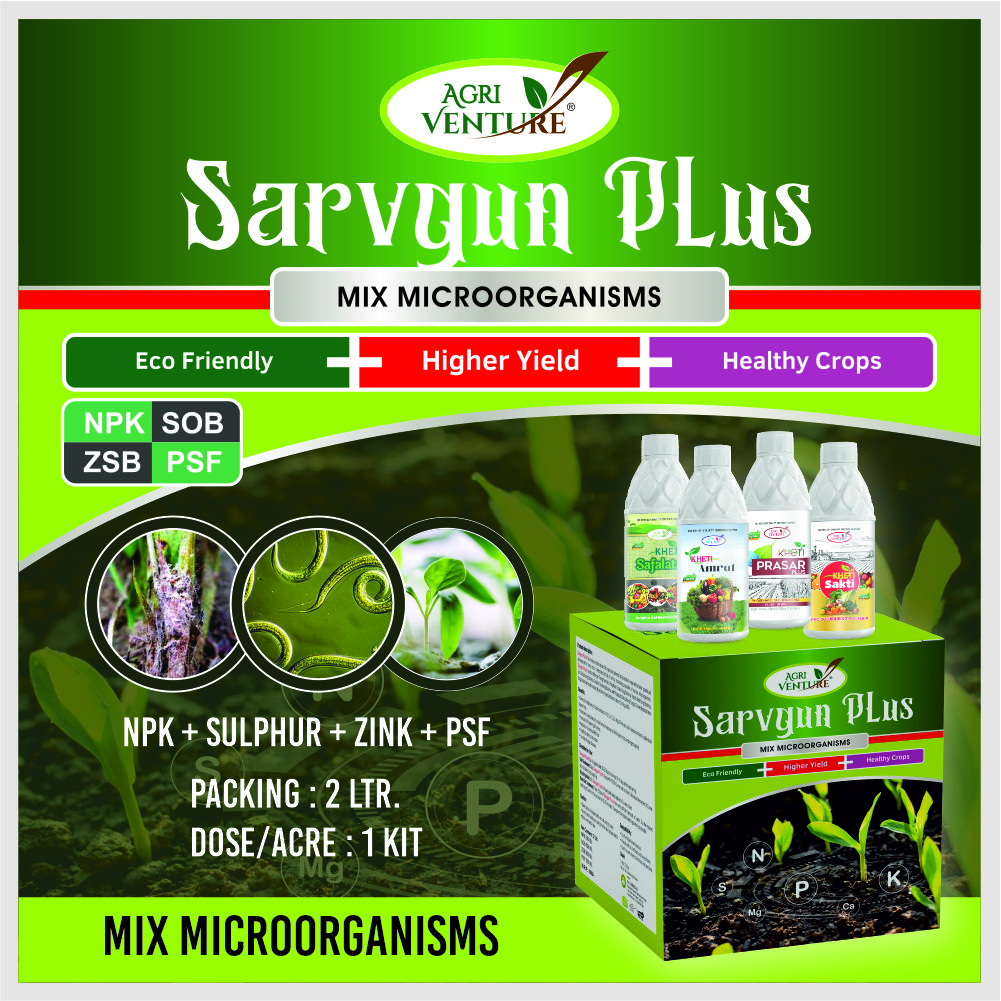
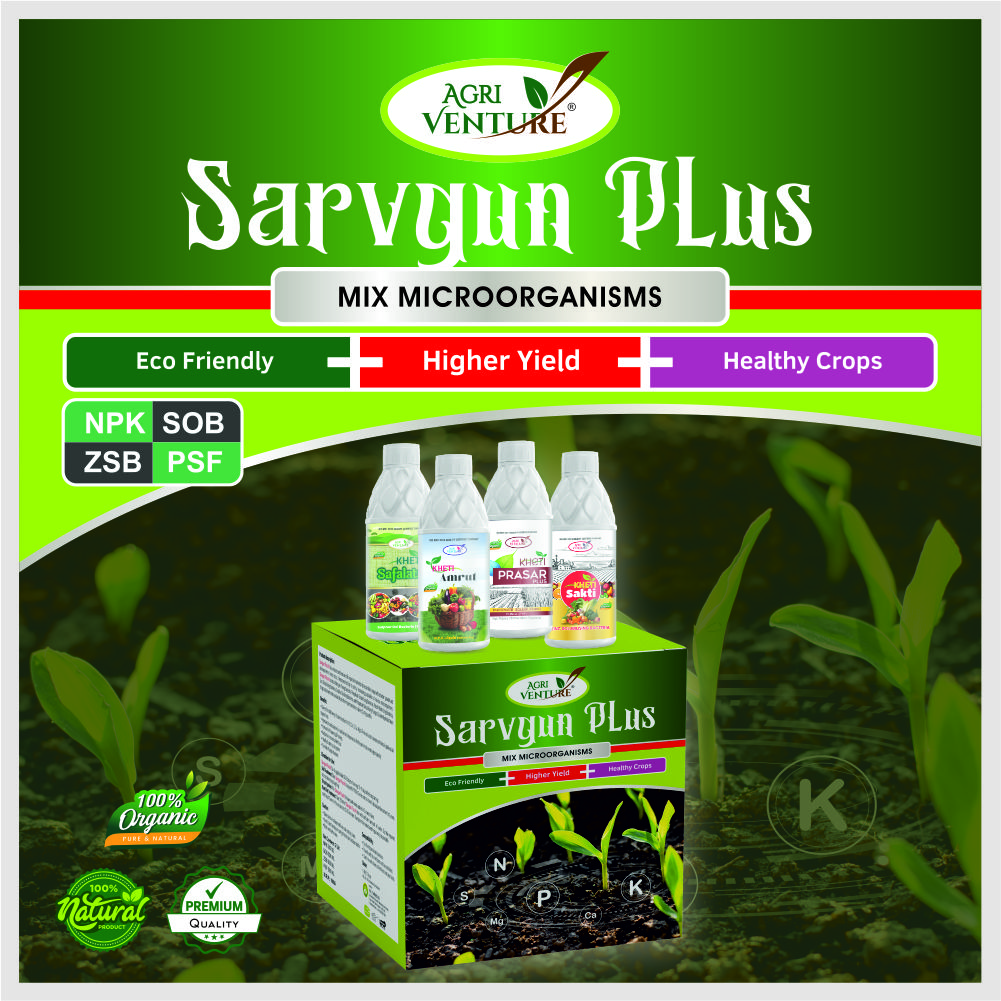

AGRIVENTURE SARVGUN PLUS (NPK + SULPHUR + ZINC + PSF) KIT - Bacterial Product
Description:
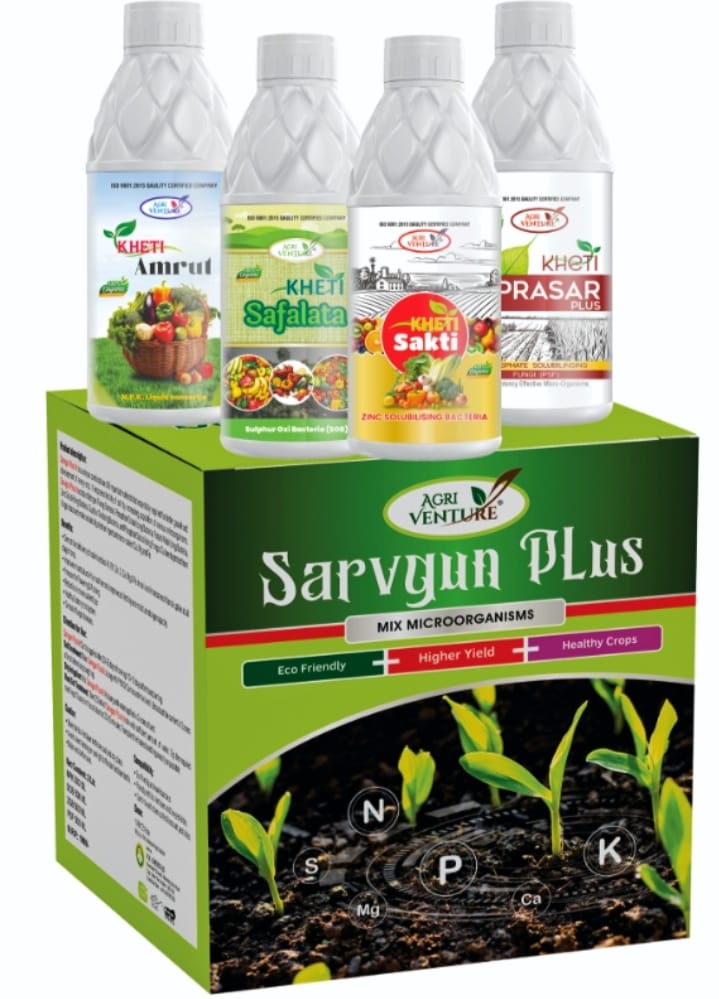
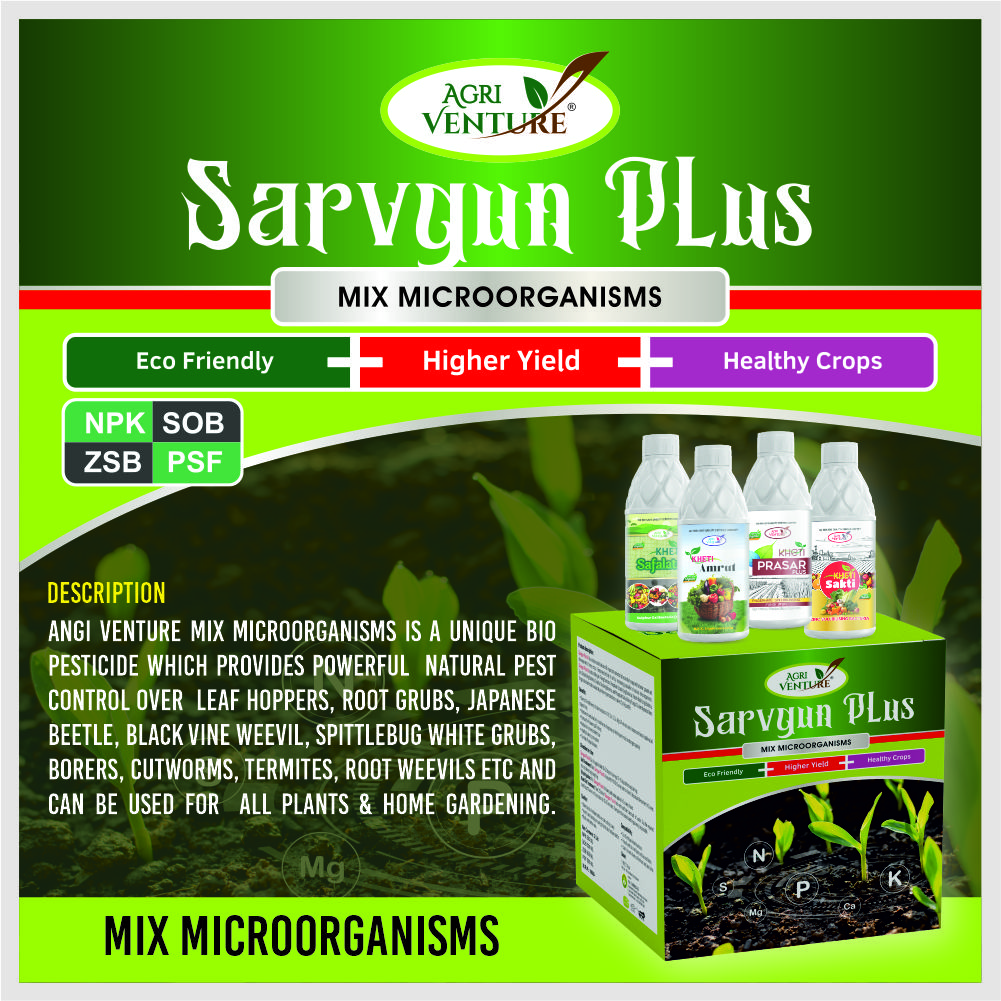
AGRIVENTURE SARVGUN PLUS a powerful biological blend, combining KHETI AMRUT (NPK Consortia) with KHETI SAFALATA (Sulfur Oxidizing Bacteria (SOB)), KHETI SAKTI (Zinc Solubilizing Bacteria (ZSB)), and KHETI PRASAR (Phosphate Solubilizing Fungi (PSF)), transforms unavailable, soil-bound nutrients into plant-ready forms. This sustainable approach enhances crop yields and soil fertility while minimizing chemical fertilizer usage.
Technical content: NPK Consortia + Sulphur Oxi Bacteria (SOB) + Zinc Solubilinsing Bacteria (ZSB) + Phosphate Solubilinsing Fungi (PSF)
Key Features & Benefits:
- Balanced Primary Nutrition (NPK): Nitrogen-fixing bacteria pull atmospheric nitrogen into the soil. Meanwhile, Phosphate Solubilizing Bacteria (PSB) and Potash Mobilizing Bacteria (KMB) secrete organic acids that break down insoluble soil compounds to supply plants with readily available phosphorus and potassium.
- Enhanced Phosphorus Uptake (PSF): Phosphate Solubilizing Fungi (PSF), such as Mycorrhiza, extend root reach via fine fungal threads. This boosts the absorption of vital, immobile soil phosphorus for stronger flowering and root establishment.
- Micronutrient Availability (ZSB): Zinc Solubilizing Bacteria (ZSB) convert unavailable, insoluble zinc in the soil into bioavailable forms, preventing common zinc deficiency symptoms (e.g., stunted growth and yellowing leaves).
- Sulphur Oxidation (SOB): Sulphur Oxidizing Bacteria (SOB) transform elemental sulphur into sulphates, directly promoting protein synthesis and improving oilseed quality.
- Growth Promotion & Stress Tolerance: These beneficial microbes naturally produce phytohormones (like auxins and gibberellins) and exopolysaccharides, improving drought tolerance and strengthening overall crop immunity.
- Reduced Chemical Costs: Because the microbes naturally replenish the rhizosphere, you can reduce your dependence on synthetic chemical fertilizers.
Crops suitability: Universally suitable for all crops.
Commonly used for (Insect / Diseases):
- Nutrient Deficiency Diseases: Corrects plant stunting, yellowing of leaves (chlorosis), and poor flowering caused by severe Zinc, Sulphur, Nitrogen, Phosphorus, or Potash deficiencies.
- Soil-Borne Pathogen Suppression: Beneficial bacteria (like Pseudomonas or Bacillus often present in NPK consortia) colonize the root zone and outcompete harmful fungi and bacteria, helping to fight root rots, wilts, and damping-off diseases.
- Environmental Stress: Increases plant resistance against drought and general salinity by developing robust, deeper root systems.
Mode of entry: Systemic
Mode of action:
1. NPK Consortia (Nitrogen, Phosphorus, Potassium microbes)
- Nitrogen-Fixing Bacteria: Colonize the root zone and absorb free atmospheric nitrogen, converting it into ammonia and nitrates that plants can readily absorb for leafy growth.
2. Sulphur Oxidizing Bacteria (SOB)
- Oxidation Process: These bacteria (such as Thiobacillus) use reduced sulphur compounds (like elemental sulphur) as an energy source, oxidizing them into sulphates.
- Nutrient Availability: Sulphate is the only form of sulphur plants can absorb, which is critical for forming essential amino acids.
- Soil Reclamation: The biological production of mild sulphuric acid lowers soil pH, making other locked micronutrients available and reclaiming saline-sodic soils.
3. Zinc Solubilizing Bacteria (ZSB)
- Acidification and Chelation: They secrete organic acids and chelated ligands to dissolve insoluble, fixed zinc compounds (like zinc oxide and zinc carbonate) in the soil.
- Bioavailability: They convert these into ions, aiding plants in hormone production and internode elongation.
4. Phosphate Solubilizing Fungi (PSF)
- Extensive Reach: Fungi form massive hyphal networks that extend deeper into soil aggregates than bacteria, mechanically penetrating insoluble phosphate minerals.
- Enzyme and Acid Secretion: They secrete phosphatase enzymes and large amounts of organic acids to solubilize locked organic and inorganic phosphorus into accessible phosphate.
- Stress Tolerance: PSF generally show higher resilience to drought and extreme pH levels compared to bacteria.
Mode of application: Soil application, Seed treatment or Drip irrigation
Dose : 1 kit in 1 acre
Additional information:
- Chemical Incompatibility: Do NOT mix Agriventure Sarvgun with chemical bactericides or synthetic pesticides, as they will kill the beneficial live spores. Maintain a gap of 10–15 days before or after any chemical spray.
- Organic Compatibility: Completely safe and highly effective to use alongside biofertilizers and farm yard manure (FYM).
- Storage: Store in a cool, dry place away from direct sunlight to maintain a high Colony Forming Unit (CFU) count.
Available Sizes
2 LTR
Dose
1 kit in 1 acre
Buy Now



×
![]()